
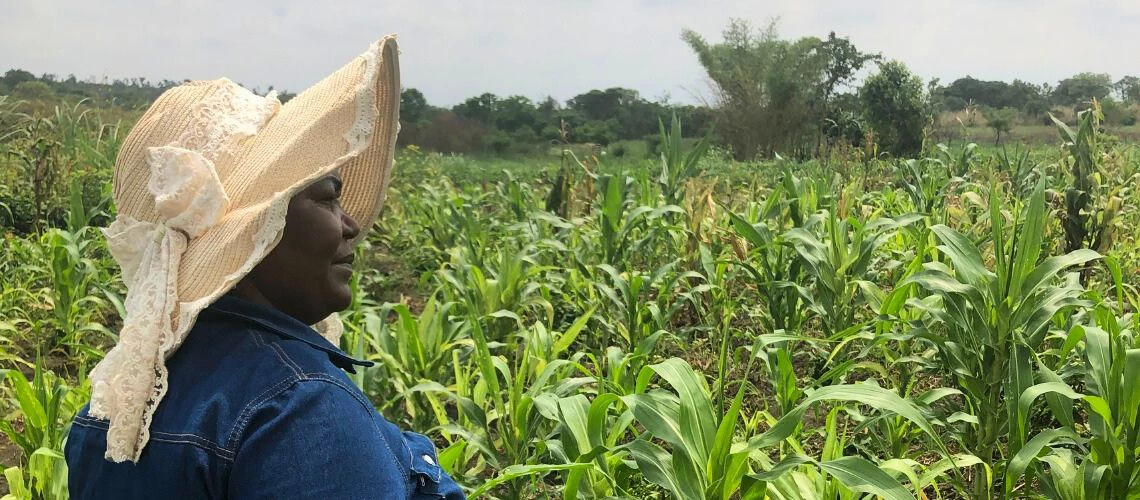
The Future of Agriculture in Tanzania: Mechanization, Climate Resilience, and Food Security
Admin User
The Future of Agriculture in Tanzania
Tanzania is home to over 44 million hectares of arable land, yet less than 20% is currently under cultivation. With a population projected to exceed 100 million by 2050, the pressure on the agricultural sector to modernize and scale has never been greater.
The State of Tanzanian Agriculture
Agriculture remains the backbone of Tanzania's economy, contributing approximately 26% of GDP and employing nearly 65% of the workforce, according to the World Bank Tanzania Overview.
Despite its dominance, the sector faces deep structural challenges. Smallholder farmers — who account for more than 75% of total agricultural output — still rely heavily on hand hoes and rain-fed farming. This dependence on traditional methods leaves them vulnerable to climate shocks, market volatility, and low productivity.
"Transforming agriculture is not just about food — it's about economic transformation, poverty reduction, and climate resilience." — FAO, State of Food and Agriculture 2023
Mechanization: Closing the Productivity Gap
One of the most significant levers for agricultural transformation is mechanization. Countries like Brazil and India have demonstrated that introducing tractors, planters, and combine harvesters at scale can dramatically increase yields and reduce post-harvest losses.
In Tanzania, the government's Agricultural Sector Development Programme (ASDP II) specifically targets mechanization as a core pillar. You can read the full framework at the Ministry of Agriculture Tanzania.
Key benefits of mechanization include:
Timeliness — Machines can prepare land and plant within optimal weather windows, which hand tools cannot match
Scale — A single tractor can cover 8–10 acres per day compared to 0.5 acres with a hand hoe
Post-harvest efficiency — Mechanized threshers reduce grain losses from 30% to under 5%
According to the International Food Policy Research Institute (IFPRI), mechanization in sub-Saharan Africa could increase agricultural productivity by up to 40% if paired with the right inputs and training.
Climate Change: The Growing Threat
Tanzania is already experiencing the effects of climate change. Erratic rainfall patterns, prolonged droughts in regions like Dodoma and Singida, and flooding in the Kilosa and Morogoro valleys are disrupting planting seasons and devastating harvests.
The Intergovernmental Panel on Climate Change (IPCC) Sixth Assessment Report warns that East Africa could see a 2–3°C temperature increase by 2050, reducing yields of staple crops like maize and sorghum by up to 20%.
Climate-smart practices gaining ground in Tanzania:
1. Drought-resistant seed varieties Organizations like CIMMYT (International Maize and Wheat Improvement Center) have developed drought-tolerant maize varieties specifically bred for East African conditions. Varieties like DT Maize have shown 20–30% better performance under water stress compared to conventional seeds.
2. Conservation agriculture Minimum tillage and crop rotation practices are being promoted across the Southern Highlands by NGOs and government extension officers. These methods improve soil moisture retention and reduce erosion.
3. Solar-powered irrigation With grid electricity unreliable in rural areas, solar irrigation pumps are transforming smallholder farming in regions like Mbeya and Iringa. The FAO's investment case for solar irrigation estimates that solar pumps can reduce irrigation costs by 60% compared to diesel alternatives.
Digital Agriculture: Data-Driven Farming
The rise of agri-tech is opening new frontiers for Tanzanian farmers. Mobile-based platforms are now delivering real-time weather forecasts, market prices, and agronomic advice directly to farmers' phones.
Notable examples include:
Esoko — A platform providing commodity price alerts and agricultural advisory services across Africa
Apollo Agriculture — Offering credit, inputs, and advice to smallholder farmers using satellite data and machine learning
WFP's FARM — Using remote sensing to monitor crop health and predict food insecurity hotspots
Tanzania's own Tanzania Agricultural Research Institute (TARI) is also piloting digital extension services to reach farmers in remote areas. More at TARI's official site.
Post-Harvest Losses: The Silent Crisis
Tanzania loses an estimated 30–40% of its food after harvest due to poor storage, inadequate transportation infrastructure, and lack of processing facilities, according to a 2022 report by the African Development Bank.
This is not just a food security issue — it's an economic one. Reducing post-harvest losses by half could effectively double the income of millions of smallholder farmers without planting a single additional seed.
Solutions being deployed across Tanzania:
Hermetic bags (PICS bags) — Low-cost airtight storage bags that eliminate the need for chemical pesticides and preserve grain for up to 12 months
Community grain banks — Collective storage facilities that allow farmers to store and sell when prices are favorable
Cold chain infrastructure — Especially critical for horticultural crops like tomatoes, onions, and mangoes destined for urban markets
The Road Ahead
Tanzania's agricultural transformation will not happen overnight. But the ingredients are in place — vast arable land, a young and growing workforce, increasing private sector investment, and a government committed to the sector's growth.
The challenge is connecting these elements: giving smallholder farmers access to modern machinery, quality inputs, reliable markets, and digital tools — all within a climate-resilient framework.
Organizations like Agricom Africa are playing a direct role in this transformation, bridging the gap between global agricultural technology and the Tanzanian farmer on the ground.